Get phone and SMS alerts fromMicrosoft Azure
Azure Monitor watches Azure resources like virtual machines and Application Insights, firing alerts when a metric or log condition is met. Spike turns every Azure Monitor alert into an incident and delivers it to the on-call engineer across phone, SMS, Slack, and email, escalating through the policy until someone picks it up.
Set up with AI
I use Microsoft Azure for monitoring and Spike for on-call and incident management. Walk me through connecting them: create a Microsoft Azure integration in Spike, copy its webhook URL, and add that webhook to Microsoft Azure alert settings. Then help me send a test alert to confirm incidents show up in Spike.
What is Microsoft Azure?
Azure Monitor is the native observability service for Microsoft Azure, collecting metrics, logs, and health data across virtual machines, App Service, Application Insights, and the rest of your Azure resources. Its alert rules watch those signals and fire when a metric threshold or log query condition is met — signalling anything from a stalled VM to a spike in application exceptions.
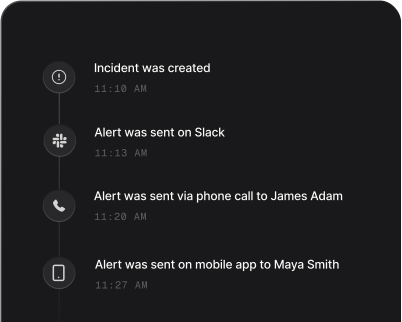
On its own, an Azure Monitor alert emails a contact or posts to an action group that is easy to miss outside working hours. Wired to Spike through a webhook action, the same alert becomes an incident: it reaches the on-call engineer by call and text right away, steps up to the next person on the schedule when it goes unanswered, and consolidates repeat fires into one incident instead of a run of near-identical alerts. With automatic resolution enabled on the alert rule, the incident in Spike closes itself the moment Azure reports recovery — nothing left to tidy up afterward.
How to set up Microsoft Azure alerts
Every Spike integration is a unique webhook URL. Paste it into Microsoft Azure and alerts start flowing — no agents, no code.
Step 1: Create an Azure integration in Spike
In your Spike dashboard, open Integrations and choose Azure. Spike generates a unique webhook URL for this integration — copy it.
Step 2: Create an alert rule in Azure Monitor
In the Azure Portal, open Monitor and create a new alert. Pick the resource to watch (such as a virtual machine), define the condition that should trigger it, and give the alert a description and severity.
Step 3: Add the Spike webhook as the action
In the alert's action rule, paste the Spike webhook URL as a custom webhook. Under advanced settings, enable the rule on creation and turn on automatically resolve alerts so incidents in Spike close when Azure recovers.
That's it — Microsoft Azure alerts now page whoever is on call.