

Two weeks ago, we asked ourselves a simple question: How can we improve the reading experience of Spike’s blog?
There are about two hundred articles on the blog, covering alerting, on-call, incident response, and more. Kaushik and I discussed each of these topics thoroughly before turning them into articles. But when someone landed on the blog, they couldn’t easily discover these articles. It was mostly one long scroll, and though we had some categories, they weren’t organized well. So, we set out to fix that.
We went back to all 200+ articles and sorted them into new, better categories and tags. Then we redesigned the whole thing and shipped it.
This is the story of how it happened. The good calls, the debates, and the fun moments along the way.
How it all started
At first, Spike’s blog was on Ghost. We later moved to WordPress with an off-the-shelf theme, and added some custom CSS along the way. It worked, but it never quite felt like Spike.
A few months in, we built our own theme from scratch. It matched our visual identity well, but the way our content was structured still had room to grow.
We came across First Round Review’s Curated Reads section. Everything on their site was organized so well. They had entire collections built around a specific audience or a specific challenge. It was one of those “why haven’t we thought of this” moments, and we wanted our readers to have the same experience: content built for whoever landed on the blog, whether that’s an on-call engineer, an SRE, someone drowning in alerts, or someone handling midnight incidents.
We already have a good collection of articles on our blog. All we need to do is put a proper structure around all of it. So, we decided to rebuild Spike’s blog.
From scattered to sorted
Once we decided to rebuild the blog, the first thing to fix wasn’t the design. It was the categories and tags themselves. The ones we had didn’t map cleanly to the kind of structure we wanted, so I built a new set of categories, like Building Spike, Alerting, and Escalation policies. Alongside that, I added journey tags like on-call engineer, drowning in alerts, and midnight incidents.
Then came the actual work of applying all that to 200+ articles. I built an agent with Claude that would look at an article and suggest a category and tag for it. I’d review the suggestion, finalize it, and move to the next article. One by one, until all 200+ were done. I kept a running table in Airtable with every article and its final category and tags.
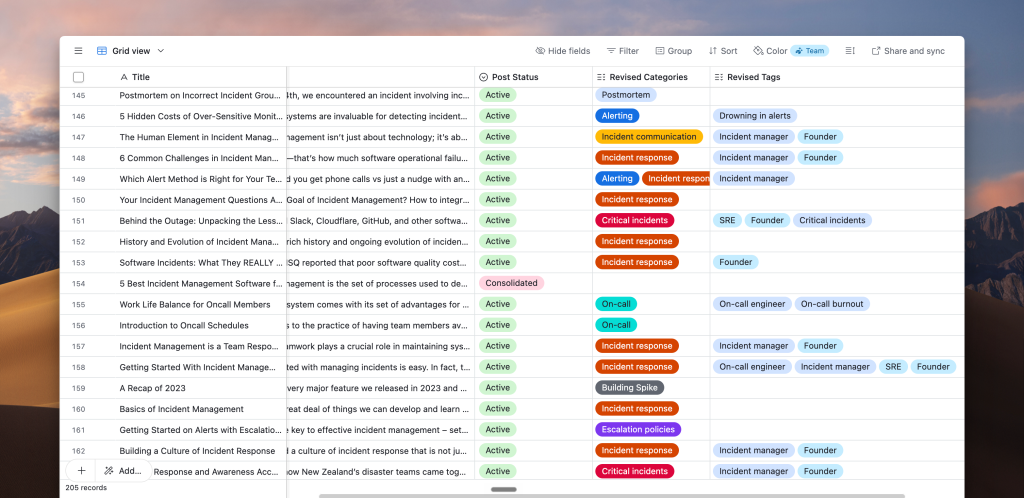
Once that table was ready, I hooked up a script to the WordPress REST API. It read straight from the table and updated every article’s category and tags on the live site. That’s how 200+ articles went from scattered to sorted.
Getting the design right
With the content finally organized, it was time to think about how the blog would actually look and feel. Nikhil and I spent a lot of time brainstorming what this new design should even look like. He’d put together a set of design options, and we’d discuss them until we landed on something we both liked.
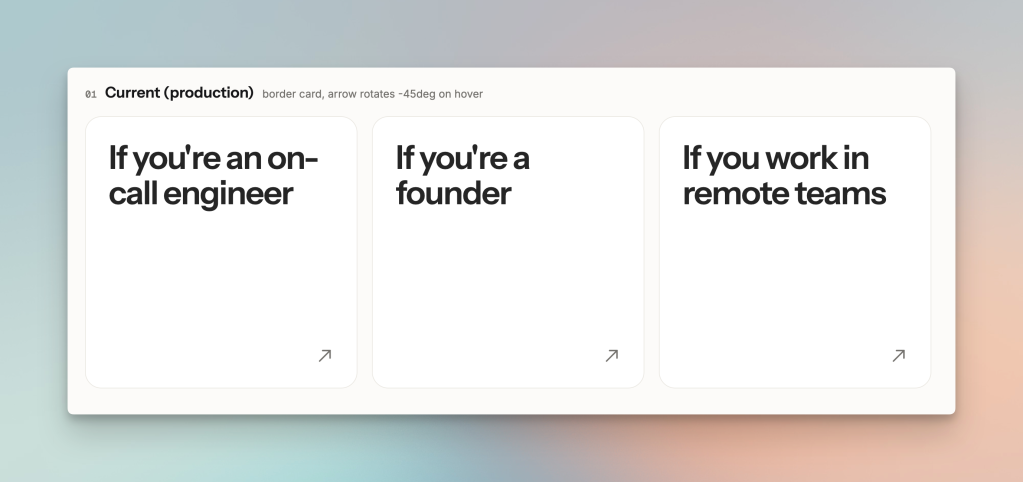
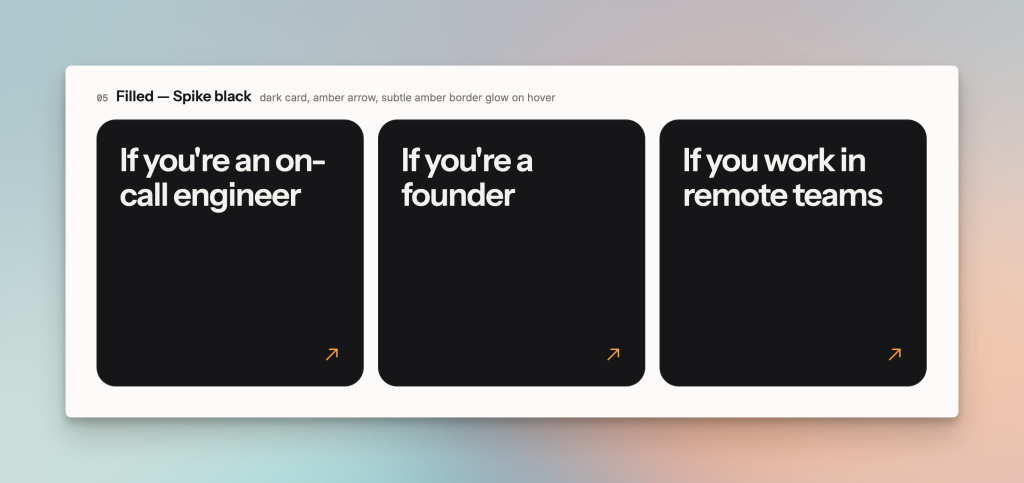
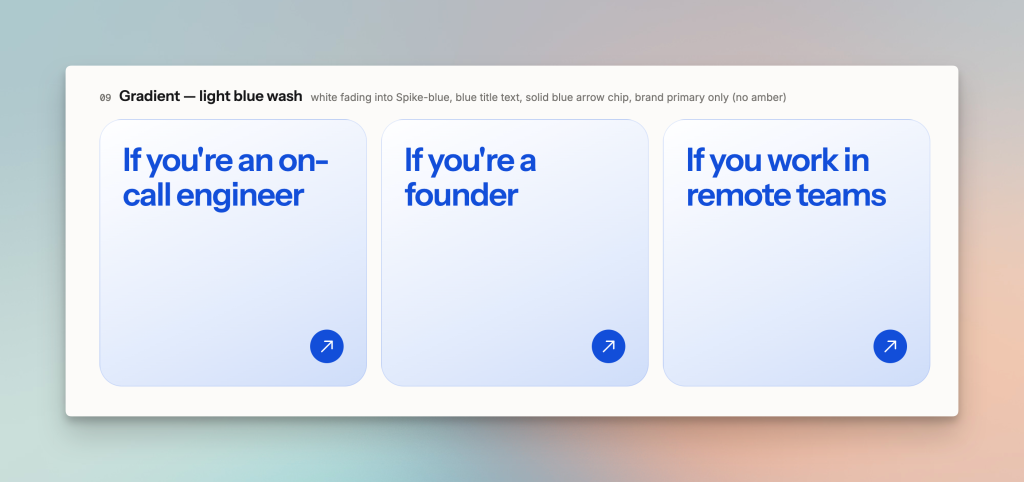
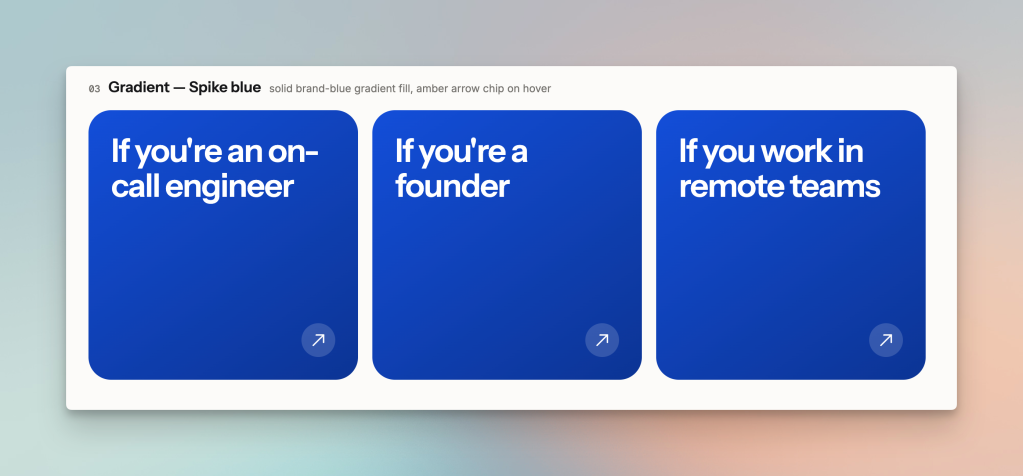
We put together a first version and sent it to Kaushik for feedback. His main note was that readers shouldn’t get stuck on one page or stuck in a loop. They needed multiple ways to hop between pages and keep exploring. That one piece of feedback shaped how we thought about the reader’s journey from then on.
For the next version, we built in those extra ways to hop around, but we went overboard on the homepage itself. There was a YouTube embed, newsletter plugins, and a handful of other components all competing for space. Once Kaushik pointed it out, it was hard to unsee. We cleaned up the homepage and cut the extra components down to what actually mattered.
Version three went out for review with just a few minor changes left to make. Once those were done, we shipped it.
People who shaped the blog
I had a lot of help from Nikhil, Kaushik, and Daman for this project.
Nikhil was fast with iterations. Whatever feedback we gave him, he’d take it seriously and implement it well. His eye for detail was sharp too, the kind that catches things you’d otherwise miss. He is currently interning with us, and I’d recommend him to anyone hiring without hesitation.
If Nikhil was the one turning ideas into something we could actually look at, Kaushik was the one making sure those ideas made sense in the first place. He brought a perspective from outside the two of us actually building the thing. He’s picky in the best way, and he steered us back on track more than once.
And whenever we hit a wall, Daman was the one who showed up. Whatever the hurdle was, he’d jump in and help us work through it right away.
A few fun moments
Working with these three wasn’t all serious business. We had some fun moments too.
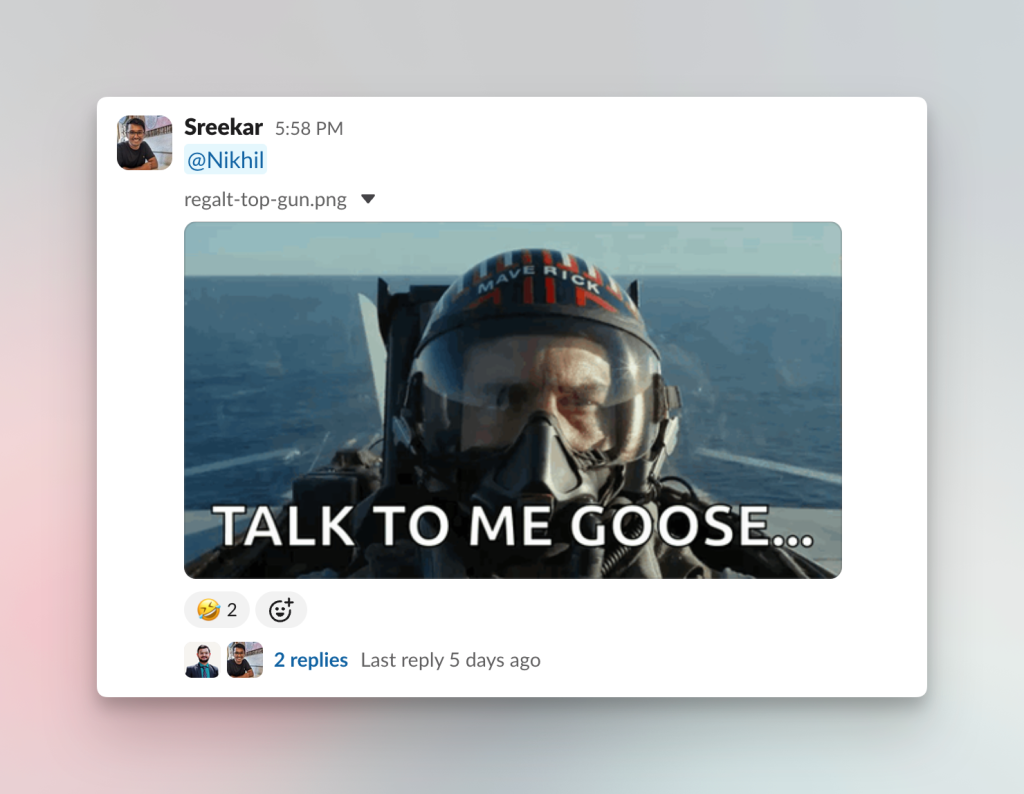
There was the time Nikhil went quiet on Slack for longer than usual, and I sent him a Top Gun gif with “Talk to me, Goose” written across it to nudge him along.
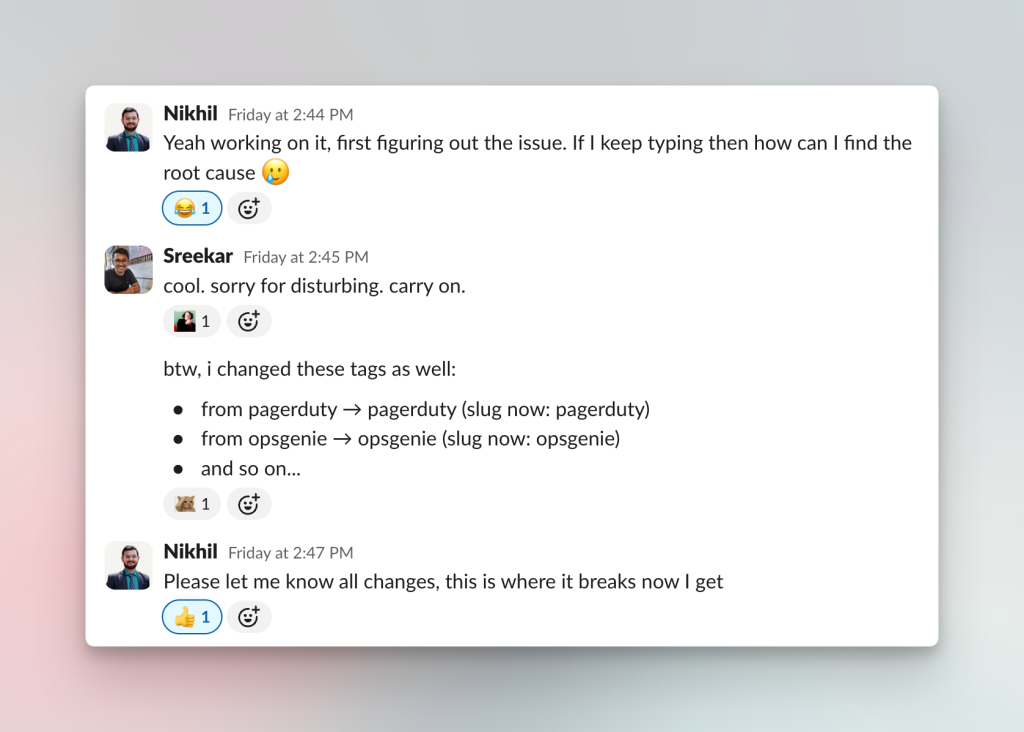
Then there was the time Nikhil was deep in a bug, trying to trace it back to the root cause, and the root cause turned out to be me. I’d renamed a bunch of tag slugs without telling him.
Everything, in its place
The blog is live now, and it looks nothing like it did when we started this project. Every article has a home, and readers can actually find their way to what they came for.
We built this for you, so if you think something could be better, we want to hear about it. Feedback is welcome. Reach out to us at [email protected], on X/Twitter, or on LinkedIn.