Get phone and SMS alerts fromBuildkite
Buildkite raises the alarm — Spike makes sure a human hears it. Every Buildkite alert becomes an incident with on-call schedules, escalations, and alerts on phone, SMS, Slack, email, WhatsApp, and Teams.
Set up with AI
I use Buildkite for monitoring and Spike for on-call and incident management. Walk me through connecting them: create a Buildkite integration in Spike, copy its webhook URL, and add that webhook to Buildkite alert settings. Then help me send a test alert to confirm incidents show up in Spike.
What is Buildkite?
Buildkite keeps watch over your systems and raises an alert the moment something goes wrong — a failed check, an error spike, a service that stops responding.
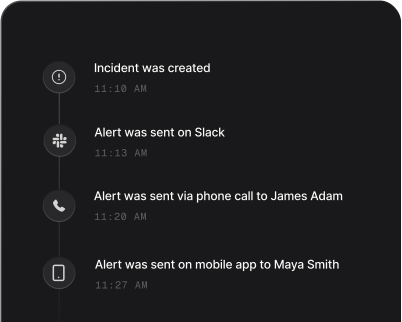
Connected to Spike, those alerts become incidents: the right on-call person gets a phone call and SMS within seconds, similar incidents are grouped to cut the noise, and everything is tracked until it is resolved.
How to set up Buildkite alerts
Every Spike integration is a unique webhook URL. Paste it into Buildkite and alerts start flowing — no agents, no code.
Step 1: Create a Buildkite integration in Spike
In your Spike dashboard, open Integrations and choose Buildkite. Spike generates a unique webhook URL for this integration — copy it.
Step 2: Add the webhook in Buildkite
Open the alert or notification settings in Buildkite, add a webhook endpoint, and paste your Spike webhook URL.
Step 3: Send a test alert
Trigger a test from Buildkite. The alert lands in Spike as an incident and your on-call team is alerted immediately.
That's it — Buildkite alerts now page whoever is on call.