Get phone and SMS alerts fromCloudflare
Cloudflare sits in front of your sites as CDN, DNS, and WAF, watching for DDoS attacks, security events, certificate expiry, DNS changes, and origin health. Spike turns those Cloudflare notifications into incidents — routed to the on-call engineer by phone, SMS, Slack, and email, with escalation.
Set up with AI
I use Cloudflare for monitoring and Spike for on-call and incident management. Walk me through connecting them: create a Cloudflare integration in Spike, copy its webhook URL, and add that webhook to Cloudflare alert settings. Then help me send a test alert to confirm incidents show up in Spike.
What is Cloudflare?
Cloudflare is the edge layer for millions of sites, terminating traffic at data centers around the world to serve content from its CDN, resolve DNS, filter requests through its WAF, and absorb DDoS attacks before they reach your origin. That vantage point means Cloudflare sees problems your own servers never will: a volumetric attack ramping up, a spike in blocked malicious requests, a TLS certificate about to expire, a DNS record changing, or a health check reporting your origin as down.
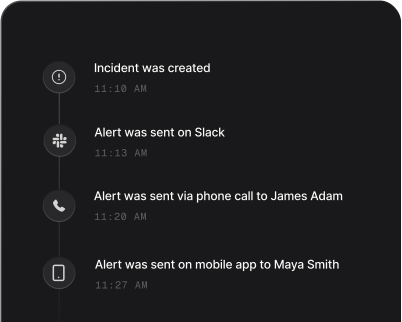
Cloudflare’s built-in notifications land in an inbox or a chat channel, which is fine for a heads-up but easy to miss when it matters. Connected to Spike, each notification becomes an incident: the on-call engineer gets a phone call and SMS within seconds, security and availability events escalate to the next responder if they go unacknowledged, and repeated alerts of the same type are grouped so a sustained attack doesn’t flood the pager. Cloudflare can send a follow-up when you configure a reset condition on the notification, but recovery isn’t guaranteed across every event type — so plan to close these incidents in Spike yourself rather than counting on them to clear on their own.
How to set up Cloudflare alerts
Every Spike integration is a unique webhook URL. Paste it into Cloudflare and alerts start flowing — no agents, no code.
Step 1: Create a Cloudflare integration in Spike
In your Spike dashboard, open Integrations and choose Cloudflare. Spike generates a unique webhook URL for this integration — copy it. Webhook notifications require a zone on a Professional or higher plan.
Step 2: Add a webhook notification in Cloudflare
In the Cloudflare dashboard, go to Notifications and add a new notification. Pick the event types you care about — DDoS attacks, WAF events, SSL/TLS expiry, DNS changes, or health-check failures — and set a reset condition so incidents can auto-resolve.
Step 3: Point the notification at Spike and test
Choose Webhook as the delivery method, paste the Spike URL, and set the content type to application/json if the field is available. Save, then trigger a test — it appears in Spike as an incident within seconds.
That's it — Cloudflare alerts now page whoever is on call.