Get phone and SMS alerts fromZabbix
Zabbix keeps an eye on your servers, networks, and services, firing triggers the moment a host goes quiet or a metric crosses a threshold. Spike turns every Zabbix trigger into an incident — routed to the on-call engineer by phone, SMS, Slack, and email, with escalations if nobody responds.
Set up with AI
I use Zabbix for monitoring and Spike for on-call and incident management. Walk me through connecting them: create a Zabbix integration in Spike, copy its webhook URL, and add that webhook to Zabbix alert settings. Then help me send a test alert to confirm incidents show up in Spike.
What is Zabbix?
Zabbix is a mature open-source monitoring platform for infrastructure, networks, and applications. It collects metrics from hosts, switches, databases, and cloud services, then evaluates triggers — expressions that fire when a host stops responding, a disk fills up, a service flaps, or a metric drifts outside its expected range. Teams lean on it because it monitors almost anything with an agent, SNMP, or a simple check.
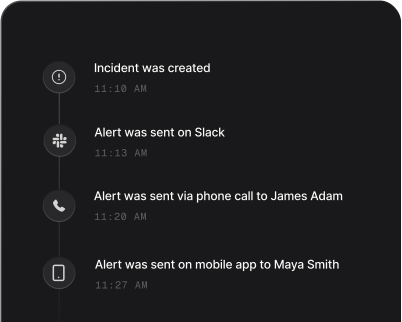
A Zabbix trigger on its own sends an email or a dashboard notification, which is easy to miss overnight or on a weekend. Wired to Spike, that same trigger becomes an incident: the on-call engineer gets a phone call and SMS within seconds, the alert escalates to the next responder if it goes unacknowledged, and repeated fires from the same trigger are grouped so a noisy host doesn’t bury the signal. Your on-call rotation and escalation policy decide who is reached and when, so a network outage at 3am reaches a human, not an empty inbox.
How to set up Zabbix alerts
Every Spike integration is a unique webhook URL. Paste it into Zabbix and alerts start flowing — no agents, no code.
Step 1: Create a Zabbix integration in Spike
In your Spike dashboard, open Integrations and add Zabbix. Spike generates a unique webhook URL for this integration — copy it.
Step 2: Add a webhook media type in Zabbix
In Zabbix, go to Administration → Media types and create a new media type of type Webhook. Paste the Spike webhook URL as the endpoint so Zabbix knows where to send alerts.
Step 3: Assign the media type to a user
Under Administration → Users, open the user who should receive alerts and add the new Spike media type in the Media tab.
Step 4: Configure an action and test
Under Configuration → Actions, create an action with your trigger conditions and, in Operations, send to the Spike media type and user. Save it and fire a trigger to confirm the incident lands in Spike within seconds.
That's it — Zabbix alerts now page whoever is on call.