Get phone and SMS alerts fromRobotalp
Robotalp runs a fleet of robots against your websites and APIs, watching availability, speed, security, and content integrity from more than twenty locations. Spike turns every Robotalp down alert into an incident — routed to the on-call engineer by phone, SMS, Slack, and email, with escalations if nobody responds.
Set up with AI
I use Robotalp for monitoring and Spike for on-call and incident management. Walk me through connecting them: create a Robotalp integration in Spike, copy its webhook URL, and add that webhook to Robotalp alert settings. Then help me send a test alert to confirm incidents show up in Spike.
What is Robotalp?
Each Robotalp robot is a single check — uptime, response time, SSL and domain expiry, source-code and content changes, or blacklist status — and a site usually has several of them running side by side. Grouped together, they answer one question in one place: is everything we run up, fast, and unaltered? What those robots see also feeds the status pages Robotalp publishes for you, so customers can check for themselves instead of writing in.
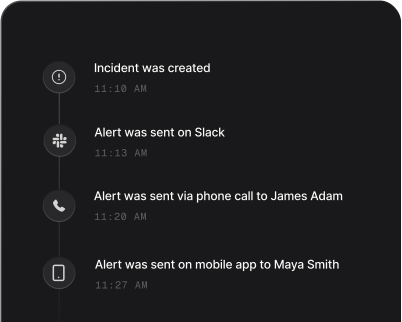
On its own, a Robotalp alert is an email or a chat message, and both are easy to sleep through. Connected to Spike, a down robot becomes an incident: the on-call engineer gets a phone call and an SMS within seconds, the alert escalates to the next person if nobody acknowledges it, and Robotalp’s repeat notifications for a robot that is still down fold into the incident already open instead of paging the rotation again. When the robot reports back up, Spike resolves the incident automatically — so a recovery overnight doesn’t leave a ticket to sweep up in the morning.
How to set up Robotalp alerts
Every Spike integration is a unique webhook URL. Paste it into Robotalp and alerts start flowing — no agents, no code.
Step 1: Create a Robotalp integration in Spike
In your Spike dashboard, open Integrations and choose Robotalp. Spike generates a unique webhook URL for this integration — copy it.
Step 2: Add a webhook in Robotalp
In Robotalp, go to Integrations → Add Integration and pick Webhook. Paste the Spike webhook URL, and leave the custom Headers field empty — Spike authenticates the request through the URL itself.
Step 3: Add the source key to the custom payload
Robotalp merges its custom Payload field into every POST it sends, so set it to {"source": "robotalp"}. That one key is how Spike recognises a Robotalp alert, so the integration keeps working even if Robotalp renames its own payload fields.
Step 4: Test the connection and switch the channel on
Hit Test Connection to send a sample payload — if it opens an incident in Spike, resolve it, that was just the check. Then open each robot you want to watch, switch the Spike webhook on under its Alerts tab, and save.
That's it — Robotalp alerts now page whoever is on call.