Get phone and SMS alerts fromSematext
Sematext watches your logs, infrastructure metrics, and synthetic checks in one place, firing alerts when a metric drifts, an error pattern appears, or an endpoint slows down. Spike turns those alerts into incidents — routed to the on-call engineer by phone, SMS, Slack, and email, with escalations if nobody responds.
Set up with AI
I use Sematext for monitoring and Spike for on-call and incident management. Walk me through connecting them: create a Sematext integration in Spike, copy its webhook URL, and add that webhook to Sematext alert settings. Then help me send a test alert to confirm incidents show up in Spike.
What is Sematext?
Sematext is a full-stack observability platform that brings logs, infrastructure and application metrics, and synthetic monitoring together. It watches your hosts, containers, and services, indexes your log streams, and runs synthetic checks against your endpoints — then raises alerts when a metric crosses a threshold, an error pattern spikes in the logs, or a synthetic probe reports a slow or failing endpoint.
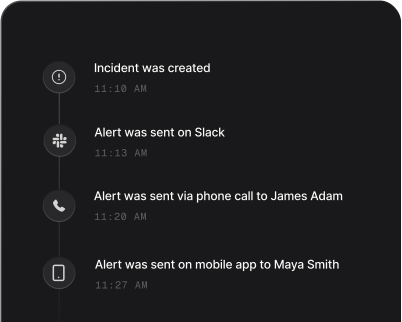
A Sematext alert on its own is an email or a chat notification that is easy to miss outside working hours. Connected to Spike, that alert becomes an incident: the on-call engineer gets a phone call and SMS within seconds, the alert escalates to the next responder if it goes unacknowledged, and repeated alerts from the same source are grouped so a noisy check doesn’t bury the signal. The $title and $description you map from Sematext carry straight into the phone call, SMS, and Slack message, and your escalation policy decides who is reached and when.
How to set up Sematext alerts
Every Spike integration is a unique webhook URL. Paste it into Sematext and alerts start flowing — no agents, no code.
Step 1: Create a Sematext integration in Spike
In your Spike dashboard, open Integrations and add Sematext. Spike generates a unique webhook URL for this integration — copy it.
Step 2: Create a new hook in Sematext
In Sematext, open the Hooks dashboard and select Create New. From the list of notification options, choose Spike.
Step 3: Configure the webhook and test
Paste the Spike webhook URL into the URL field and include the $title and $description parameters so the incident carries a clear name and detail. Add any custom variables for extra context, save the hook, and trigger an alert to confirm the incident reaches Spike within seconds.
That's it — Sematext alerts now page whoever is on call.