Get phone and SMS alerts fromVercel
Vercel builds and ships your frontend from Git, running a deployment on every push and promoting the ones that pass to production. Spike turns Vercel's deployment-lifecycle events into incidents — when a build errors out or a deployment is canceled, the on-call engineer is paged by phone, SMS, Slack, and email, with escalation.
Set up with AI
I use Vercel for monitoring and Spike for on-call and incident management. Walk me through connecting them: create a Vercel integration in Spike, copy its webhook URL, and add that webhook to Vercel alert settings. Then help me send a test alert to confirm incidents show up in Spike.
What is Vercel?
Vercel is the platform behind a huge share of modern web apps, handling Git-driven builds, preview and production deployments, serverless and edge functions, and delivery from points of presence close to your users. Most of the time that ships invisibly — until a production build breaks, a deployment errors out, or a release is canceled and the change you were counting on never reaches production.
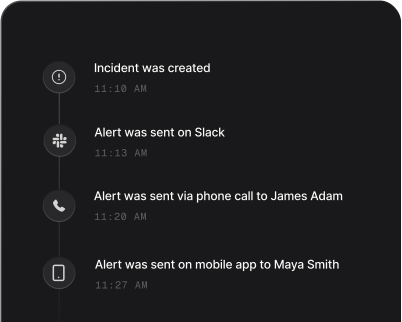
A failed deployment shows up in the Vercel dashboard and maybe an email, but that does nothing if the person who can fix it is away from their screen. Connected to Spike, each deployment-lifecycle event becomes an incident: the on-call engineer is called and texted within seconds, the alert escalates to the next responder if it goes unacknowledged, and repeated events from the same project are grouped so a stream of failed retries doesn’t turn into a wall of pages. Note that Vercel only sends webhooks on a paid Pro or Enterprise plan. Your shipping pipeline gets a real on-call safety net instead of a notification nobody reads.
How to set up Vercel alerts
Every Spike integration is a unique webhook URL. Paste it into Vercel and alerts start flowing — no agents, no code.
Step 1: Create a Vercel integration in Spike
In your Spike dashboard, open Integrations and choose Vercel. Spike generates a unique webhook URL for this integration — copy it. Vercel webhooks require a Pro or Enterprise plan.
Step 2: Add a webhook in your Vercel settings
In Vercel, open your team or project Settings and go to Webhooks. Create a new webhook, paste the Spike URL as the endpoint, and select the deployment events to watch — deployment.error and deployment.canceled.
Step 3: Save and trigger a test deployment
Save the webhook, then push a change or re-run a deployment so Vercel emits an event. It arrives in Spike as an incident within seconds and pages whoever is on call.
That's it — Vercel alerts now page whoever is on call.