

Choosing an on-call rotation is about finding a rhythm that balances your team’s well-being and your system’s reliability. The right on-call rotation helps prevent burnout and makes on-call duties sustainable over the long run.
This guide walks you through different on-call rotation patterns, from daily rotation to after-hours rotations. We’ll look at why you might choose a particular rotation and the challenges that often come with it. Also, we’ll help you spot where each pattern fits best based on your team size and incident volume.
Table of contents
Simple rule of thumb
Before we jump in, here’s a simple rule of thumb that often helps when choosing an on-call rotation.
The higher the incident volume, the shorter the on-call rotation should be, and vice versa.
Shorter on-call rotations usually work better when incidents are frequent. Longer on-call rotations are often a good fit when incidents are rare.
This is because handling several incidents every day for an entire week adds up quickly. Shorter rotations give each person a more contained window of responsibility, which prevents on-call burnout.
TL;DR
| On-call rotation | Best for |
|---|---|
| Daily | Teams with frequent incidents that resolve quickly. |
| Two-Day | Teams receiving a fair number of incidents that take time to resolve (Highly recommended when setting up on-call for the first time). |
| Three-Day | When a two-day rotation feels too short and a four-day rotation feels too long. |
| Four-Day | Moderate incident volume. Fewer handoffs and a longer break between shifts. |
| Weekly | Low and fairly steady incident volume. A week-long break. |
| Longer than a week | Extremely low incident volume (internal tools or legacy systems). |
| Six / eight-hour Shifts | High incident volume with unpredictable issues. Requires dedicated on-call staff. |
| Weekend / after-hours | Incidents mostly trigger outside business hours. |
1. Daily on-call rotation
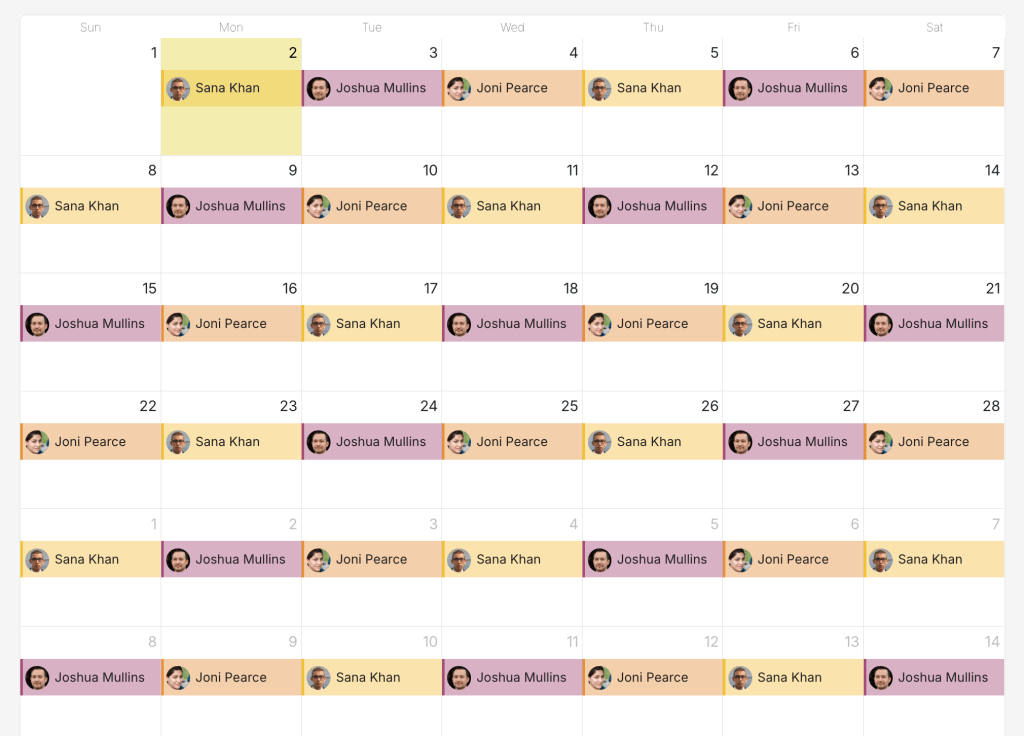
In a daily on-call rotation, each person covers a 24-hour shift before handing off to the next person.
A daily on-call rotation with three people might look like this:
- Alex covers Monday
- Bilal covers Tuesday
- Cori covers Wednesday
- Alex is back on Thursday
And the cycle continues.
Why choose daily on-call rotation
Nobody stays on-call for too long. You handle incidents for 24 hours and then someone else takes over. This keeps the responsibility contained to a single day, which can help prevent fatigue from building up the way it might over a longer rotation.
Challenges with daily on-call rotation
Since the rotation changes every day, team members can sometimes lose track of who’s on-call. Without a proper on-call tool, people might need to check the on-call schedule each time an incident triggers.
With Spike, the current on-call person is always visible to the whole team. No digging through calendars or schedule docs. See how it works →
Best fit for daily on-call rotation
Daily on-call rotation often works for teams dealing with frequent incidents that resolve quickly.
When incidents trigger several times a day, a 24-hour shift can help spread the workload evenly across the team without letting it concentrate on one person for too long. And when incidents typically resolve within an hour or two, you probably don’t need the same person to stick around for follow-up. The continuity that longer rotations provide isn’t as necessary here.
2. Two-day on-call rotation
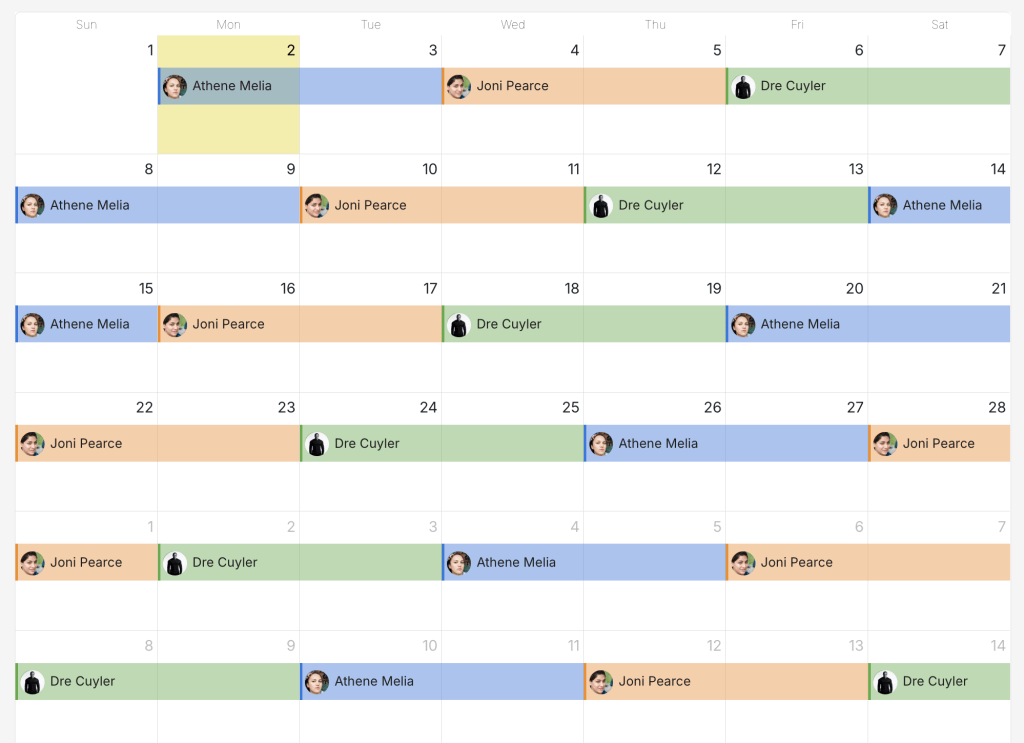
In a two-day on-call rotation, each person covers two days in a row before the next person takes over.
For example, Alex covers the first two days. Bilal takes over for the next two. Cori follows for another two days before it circles back to Alex.
Why choose two-day on-call rotation
This setup often gives you enough time to settle in without the need to switch contexts every day. If an incident triggers on your first day, you’re still around on the second day to follow up. You probably won’t need to pass complex issues to a teammate who then needs to catch up from scratch.
Challenges with two-day on-call rotation
The challenge is probably the shifting schedule. Your on-call days slide forward every week, so you don’t have a fixed handoff day. This irregularity can make it a bit harder to plan social events or appointments since you can’t just say, “I’m always on-call Tuesdays.”
Though you don’t get a fixed handoff day with a two-day on-call rotation, you can still make your handoffs smoother. Learn how to →
Best fit for two-day on-call rotation
A two-day rotation is worth considering if you receive a fair number of incidents and they take time to resolve. It offers enough continuity to see things through without burning anyone out.
Spike recommends the two-day on-call rotation as a good place to start if you’re setting up on-call for the first time.
3. Three-day on-call rotation
In a three-day on-call rotation, each person covers three days in a row before the next person takes over.
For example, Alex covers the first three days. Bilal takes over for the next three. Cori follows for another three days before it circles back to Alex.

Why choose three-day on-call rotation
This rotation usually offers a good balance between focus and rest. You get enough time to dig into issues without being on-call for a full week. With three people in the rotation, you also get a six-day break between shifts which can help with recovery.
Challenges with three-day on-call rotation
Just like the two-day rotation, the challenge here is the shifting schedule. Your on-call days slide forward every week, so you don’t have a fixed handoff day. This irregularity can make it a bit harder to plan social events or appointments.
Best fit for three-day on-call rotation
A three-day rotation can work well as a middle ground if a two-day rotation feels too short, but a four-day rotation creates a larger gap than you need. It usually fits teams with moderate incident volume where you want a balance between continuity and rest.
4. Four-day on-call rotation
In a four-day on-call rotation, each person covers four days in a row before the next person takes over.
For example, Alex covers the first four days. Bilal takes over for the next four. Cori follows for another four days before it circles back to Alex.

Why choose four-day on-call rotation
With three people in this rotation, you handle incidents for four days and then get a full week off. That week-long time off offers a good break from on-call.
Challenges with four-day on-call rotation
A four-day rotation can feel a bit overwhelming if you’re dealing with high incident volume. And it becomes more challenging when you need to maintain strict SLAs throughout that stretch.
Best fit for four-day on-call rotation
This rotation usually works best when your incident volume is moderate. Remember our rule of thumb: The higher the incident volume, the shorter the on-call rotation should be, and vice versa. When your systems are fairly stable and incidents don’t trigger frequently, this pattern can give your team breathing room without losing the rhythm of being on-call.
Stuck between two-day and four-day? Our 2-day vs. 4-day on-call rotation guide walks through the trade-offs in detail to help you pick the right one.
5. Weekly on-call rotation
In a weekly on-call rotation, each person covers a full week before handing off to the next person.
For example, Alex covers the first week. Bilal takes over for the next week. Cori follows for another week before it circles back to Alex.

Why choose weekly on-call rotation
A weekly rhythm is predictable. It is often easier to plan your personal life because everyone knows exactly when the handoff happens. You might also find this schedule simpler to manage if you have a small team.
Challenges with weekly on-call rotation
Seven days can feel draining if your incident volume is high. It becomes even more challenging when incidents are unpredictable. A full week also means covering weekends, which makes it difficult to enjoy family time or personal time.
Best fit for weekly on-call rotation
Weekly rotations usually fit best when your incident volume is low and fairly steady. Many teams prefer a Monday-to-Monday handoff because it lines up with the work week.
Not sure whether a weekly or split-week rotation fits your team? We put together a detailed guide comparing both that might help you decide.
6. On-call rotations longer than a week
When your incident volume is low, you can run on-call rotations longer than a week.
For example, Alex covers the first twelve days. Bilal takes over for the next twelve. Cori follows for another twelve days before it circles back to Alex.

Why choose on-call rotations longer than a week
The advantage of these rotations is the long break between shifts. If you have a few people rotating on a two-week schedule, you might only be on-call a handful of times a year. This means you can focus on other tasks for months at a time.
Challenges with on-call rotations longer than a week
When the timeline stretches this long, people sometimes forget they’re on-call. Weeks can go by without any incidents, and that sense of readiness tends to fade. On-call is a bit like a muscle that needs regular practice to stay sharp.
Knowledge gaps can also become an issue. If someone is on-call in January and doesn’t come back until April, your systems will likely have changed. New services get deployed and incident patterns evolve, so they might feel like they’re starting from square one each time.
Best fit for on-call rotations longer than a week
These extended rotations typically only work for teams with extremely low incident volume, perhaps internal tools or legacy systems that rarely break.
7. Six-hour / eight-hour on-call rotations
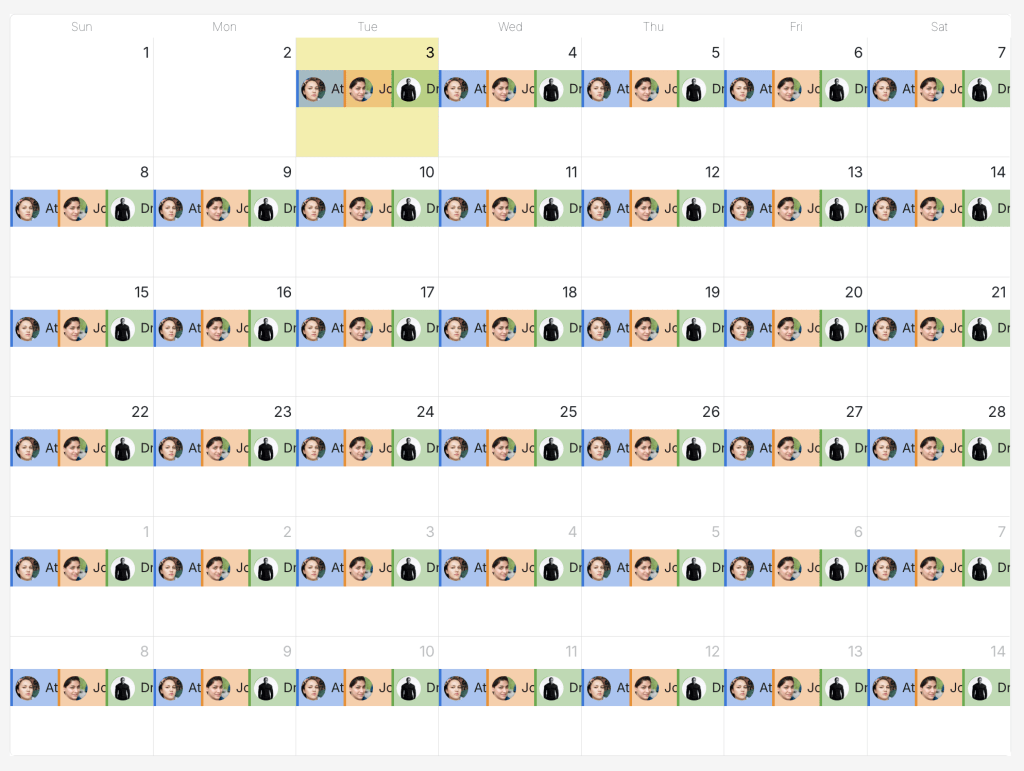
In these on-call rotations, the day is split into multiple shorter shifts (six hours or eight hours) rather than having one person cover a full 24-hour period.
A typical eight-hour schedule might look like this:
- Alex covers 10 AM to 6 PM
- Bilal covers 6 PM to 2 AM
- Cori covers 2 AM to 10 AM
And the cycle continues.

Why choose six-hour / eight-hour on-call rotations
Shorter shifts help keep the work sustainable when you deal with frequent incidents. This ties back to our rule of thumb: The higher the incident volume, the shorter the on-call rotation should be, and vice versa. When volume is high, these short shifts help protect the team from burnout.
Challenges with six-hour / eight-hour on-call rotations
This pattern typically requires dedicated staff whose primary job is to be on-call. It can be difficult to run if your team also needs to manage other work alongside on-call duties.
Best fit for six-hour / eight-hour on-call rotations
This pattern usually works best when you have high incident volume combined with unpredictable issues. Customer support teams with global audiences often use this approach to provide round-the-clock coverage. You might also see this in banks or large tech companies where people are hired specifically for on-call work.
8. Weekend / after-hours on-call rotations
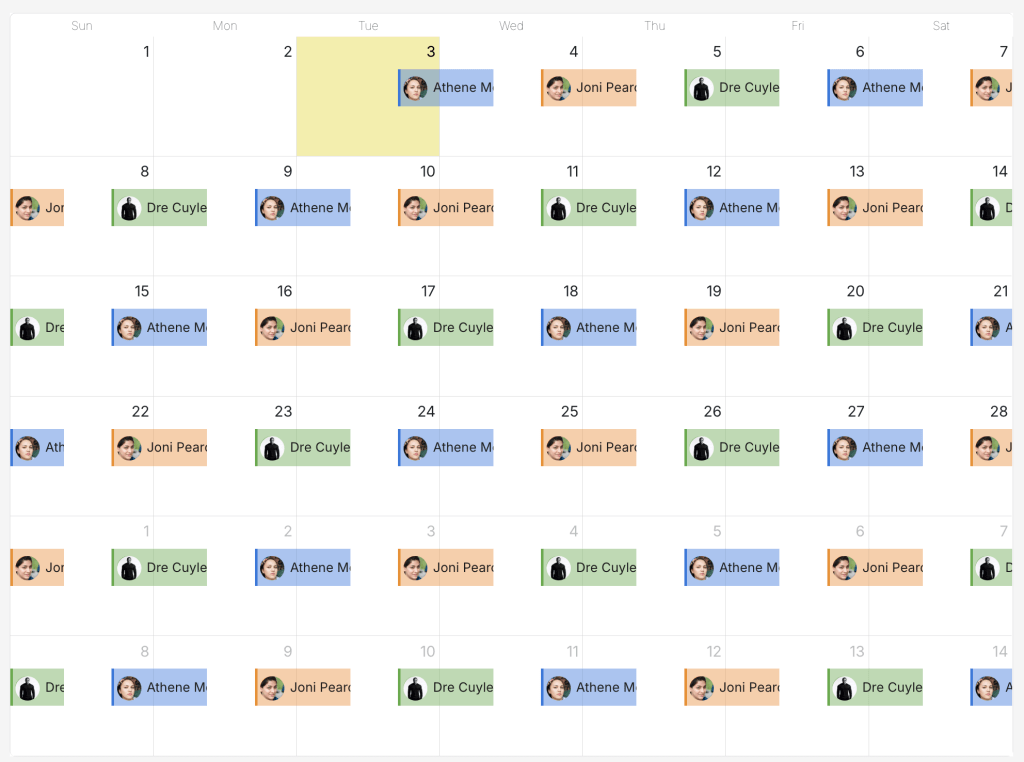
Some teams handle incidents together during office hours without formal on-call coverage. For weekends and after office hours, they either have team members rotate through on-call shifts or hire dedicated staff.

Why choose weekend / after-hours on-call rotations
Teams prefer this approach because it lets them handle daytime incidents collaboratively. Everyone is already online during business hours, so you likely don’t need a formal on-call rotation. The team can just fix problems as they happen. The rotation only starts when the work day ends to make sure someone is handling incidents.
Challenges with weekend / after-hours on-call rotations
The challenge often depends on how you set this up. If team members rotate through after-hours shifts, their personal time might get affected whenever their turn comes around. If you hire dedicated staff instead, knowledge gaps can become an issue since the after-hours team might not have the same context as people who work on the systems daily.
Best fit for weekend / after-hours on-call rotations
This pattern usually works when incidents follow predictable patterns and mostly trigger outside business hours.
For weekend coverage, Spike recommends assigning both days to one person. If you split Saturday and Sunday between two people, neither gets a proper break.
You now have a clearer picture of the different on-call rotations. We’ve looked at why teams choose them, the challenges to expect, and where each one typically fits best.
Remember the simple rule of thumb we started with: let your incident volume guide your rotation length. If incidents are frequent, shorter rotations usually work best. If things are quiet, you can likely stretch the shifts out a bit longer.
You don’t need to get it right on day one. It often helps to just pick the on-call rotation that feels right for now and run it for a few cycles. You can always adjust the rotation later based on what you learn. Good luck!
FAQs
What rotation length works best for a team of two people?
With just two people, you probably want to avoid very short rotations like daily or two-day shifts. These patterns can feel exhausting because you’re back on-call too quickly. A weekly rotation usually works better for two people since it gives each person a full week off between shifts. If your incident volume is low, you might even stretch it to two weeks.
What if my incident volume varies throughout the month?
It’s usually better to pick the rotation that handles your busiest weeks rather than your quietest ones. A longer rotation might feel fine during slow periods, but it can become overwhelming when incidents suddenly spike. A slightly shorter rotation handles those peaks better and still feels manageable when things are quiet.
How do I know if my rotation is too long or too short?
Our rule of thumb helps here: The higher the incident volume, the shorter the on-call rotation should be, and vice versa. If your team finds their on-call shifts difficult, it’s likely that incidents are too frequent for that rotation length. So, you probably need to shorten it.