Get phone and SMS alerts fromGoogle Cloud
Google Cloud Monitoring watches the health, uptime, and performance of your GCP services and fires when an alerting policy's condition is met. Spike turns every Google Cloud alert into an incident and gets it in front of the on-call engineer — by phone, SMS, Slack, or email — escalating on down the policy until it is answered.
Set up with AI
I use Google Cloud for monitoring and Spike for on-call and incident management. Walk me through connecting them: create a Google Cloud integration in Spike, copy its webhook URL, and add that webhook to Google Cloud alert settings. Then help me send a test alert to confirm incidents show up in Spike.
What is Google Cloud?
Google Cloud Monitoring is the native observability service for Google Cloud Platform, collecting metrics, uptime checks, and health signals from Compute Engine, GKE, Cloud SQL, Cloud Functions, and the rest of your GCP services. Its alerting policies watch those signals and fire when a condition — high latency, a failing uptime check, resource exhaustion — is met.
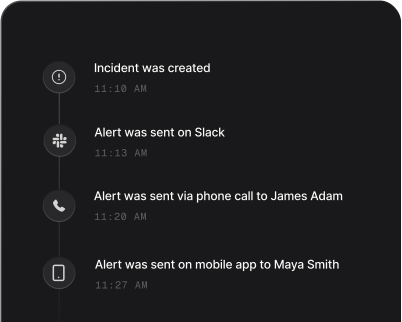
Left to itself, a Google Cloud alert emails a channel or posts to Pub/Sub, easy to overlook after hours. Connected to Spike through a webhook notification channel, the same alert becomes an incident: it dials the engineer on call and texts them at once, moves up to the next responder if the acknowledgement never comes, and merges repeat fires from the same policy so one flapping condition isn’t a dozen separate pages. Because Spike reads the policy’s recovery, the incident resolves itself the moment the condition clears — your record of what happened stays accurate without a hand on the close button.
How to set up Google Cloud alerts
Every Spike integration is a unique webhook URL. Paste it into Google Cloud and alerts start flowing — no agents, no code.
Step 1: Create a Google Cloud integration in Spike
In your Spike dashboard, open Integrations and choose Google Cloud. Spike generates a unique webhook URL for this integration — copy it.
Step 2: Add a webhook notification channel in GCP
In the Google Cloud Console, go to Monitoring → Alerting → Edit notification channels. Add a Webhook channel, paste the Spike webhook URL, name the channel, and click Test Connection and Save.
Step 3: Attach the channel to an alerting policy
Back in Monitoring, create or edit an alerting policy, define its conditions, and select your Spike webhook channel under Notifications. When the policy triggers it opens an incident in Spike, which auto-resolves when the condition clears.
That's it — Google Cloud alerts now page whoever is on call.