

Building and shipping an application is exciting, you watch your idea come alive and reach users. But once it’s out there, your real job begins: keeping it alive.
An app in production isn’t just code running, it’s a living system. It needs monitoring to stay healthy and alerting to warn when something’s off. But there’s a catch: too few alerts, and you’ll miss real issues; too many, and you’ll drown in noise.
That’s where the art of managing alerts comes in balancing sensitivity with sanity.
In this post, we’ll explore the art of managing alerts through a simple analogy car alarms, smoke alarms, and fire alarms each representing a different alert type and urgency level. We’ll see how to reduce false positives, add automation, and ensure alerts reach the right people at the right time.
Car Alarms: The False Positives
Car alarms are loud, frequent, and often ignored. They’re supposed to warn us of theft or danger but most of the time, it’s just wind, vibration, or a passing cat.

Car alarms often produce false positives but cannot be ignored. They go off for minor disturbances, yet every alert still needs a quick look to ensure it’s not something serious.
In the world of system monitoring, car alarms represent alerts that trigger frequently but rarely indicate real problems. These can disrupt focus and create alert fatigue. To reduce unnecessary interruptions, we can use pattern detection and alert delay mechanisms that verify an issue before escalating it.
Automation can also help resolve or contextualize these alerts. For example, a monitoring system could automatically run diagnostic scripts, attach recent logs, or link to relevant dashboards. This way, the engineer receiving the alert already has the information needed to assess or even resolve it quickly.
Alerts should also be non-intrusive during low-risk times such as daytime operations or business hours. Notifications can be muted or sent to a lower-priority channel like Slack, while only on-call personnel are paged during critical or after-hours incidents.
Summarizing the best practices:
✅ Add alert delays to confirm an issue before escalating, reducing unnecessary interruptions.
✅ Automate context enrichment by linking alerts to logs, metrics, or dashboards for quick diagnosis.
✅ Send non-intrusive notifications during low-risk times and only page the on-call engineer when necessary.
✅ Review and tune alerts regularly to keep your system focused, actionable, and noise-free.
The Smoke Alarm: Responding to Serious Alerts
Smoke alarms serve as early warnings — they don’t always mean there’s a fire, but they signal that something requires immediate human attention. In our systems, smoke alarms represent alerts that could indicate critical incidents if ignored.
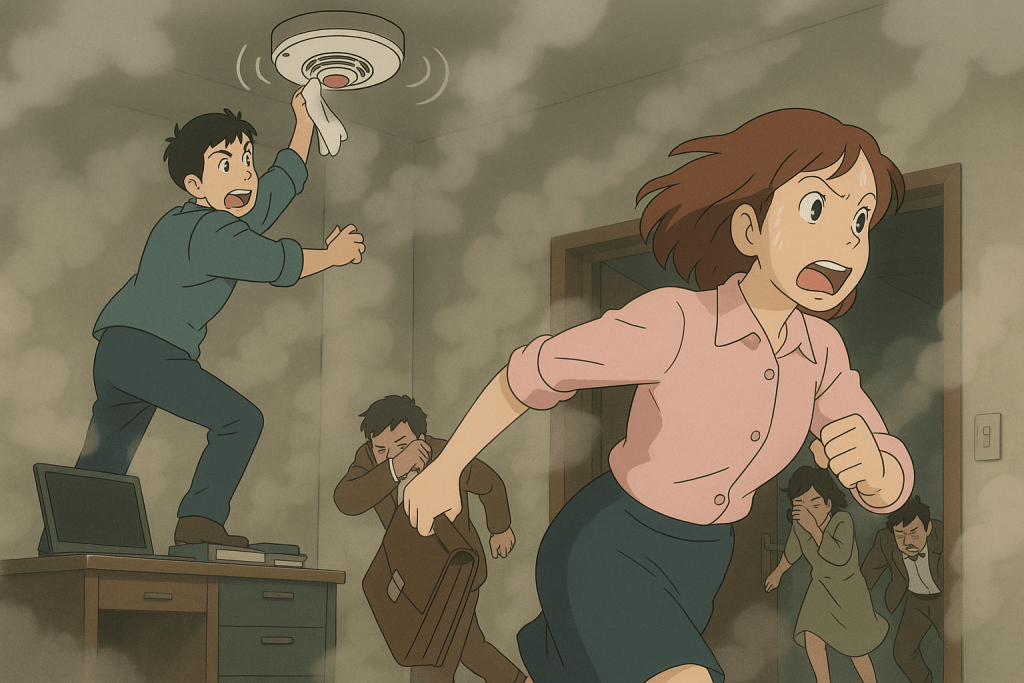
These alerts demand higher sensitivity and often prompt immediate human action, supported by contextual automation. When a smoke alarm goes off, the “fire brigade” your security experts, incident managers, and SMEs step in to diagnose and fix the issue while others stay clear.
Automation can assist here too by running health checks, collecting logs, or highlighting related metrics, so responders can focus on decision-making rather than data gathering.
Smoke alarms should trigger clear, targeted escalation not panic. The key is to have a well-defined incident process where only the right people are alerted, ensuring a fast and coordinated response without disrupting the entire team.
Summarizing the best practices:
✅ Increase sensitivity to detect early signs of critical incidents that may need immediate attention.
✅ Use contextual automation to gather logs, metrics, and related data automatically when alerts trigger.
✅ Define clear escalation paths so the right experts and incident managers are notified, the “fire brigade” that steps in when everyone else steps back.
✅ Ensure critical alerts can wake people up, during a smoke alarm, everyone must get out of the building, which means your on-call engineers need to be ready to respond even at 3 a.m.
✅ Conduct post-incident reviews to refine detection rules and improve response efficiency for future events.
Conclusion: Calm, Not Chaos
A great alerting system doesn’t just make noise, it makes sense.
Car alarms remind us to stay vigilant without overreacting. They teach us to filter out false positives, delay unnecessary notifications, and let automation handle what humans shouldn’t have to.
Smoke alarms, on the other hand, are about decisive action. When they go off, it’s time to move. Just like everyone evacuates a building when the smoke alarm sounds, your on-call engineers, your “fire brigade” must be ready to respond, even if it’s 3 a.m. The key is that only the right people are woken up, and everyone else stays calm.
By tuning your alerts for both focus and urgency, and by using automation, context, and smart routing, you create an environment where every alert matters and no one burns out in the process.
In the end, alert management isn’t about making systems louder, it’s about making them smarter, so your team can stay calm, efficient, and always ready when it counts most.