Get phone and SMS alerts fromZapier
Zapier connects 6,000+ apps with no-code automations called Zaps. With Spike on one end of a Zap, an event in almost any tool — a form entry, a database row, a new ticket — can raise an incident that reaches the on-call engineer by phone, SMS, Slack, and email, with escalations if nobody responds.
Set up with AI
I use Zapier for monitoring and Spike for on-call and incident management. Walk me through connecting them: create a Zapier integration in Spike, copy its webhook URL, and add that webhook to Zapier alert settings. Then help me send a test alert to confirm incidents show up in Spike.
What is Zapier?
Zapier is an automation platform, not a monitoring tool — it is the bridge between Spike and the 6,000+ other apps you already use. Instead of a purpose-built integration, you build a Zap: a trigger in one app and an action in another, wired together with no code. That makes it the catch-all connector for any system that doesn’t have a native Spike integration but can start a Zap.
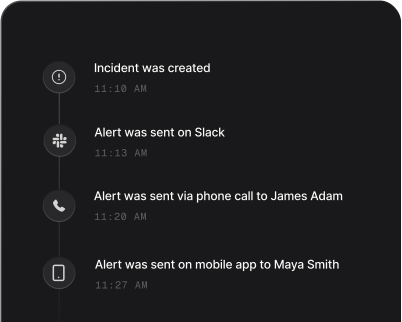
With Spike as the action in a Zap, an event in almost any tool — a critical row in a spreadsheet, a high-priority ticket, a failed job, a message in a channel — becomes an incident: the on-call engineer gets a phone call and SMS within seconds, the alert escalates to the next responder if it goes unacknowledged, and duplicate events can be grouped so one source doesn’t page the rotation repeatedly. The incident title you map in the Zap carries into the call, SMS, and Slack message. You can also run Spike as the trigger, using a Zap to fan an incident out to Discord, Jira, email, or anywhere else Zapier reaches.
How to set up Zapier alerts
Every Spike integration is a unique webhook URL. Paste it into Zapier and alerts start flowing — no agents, no code.
Step 1: Create a Zapier integration in Spike
In your Spike dashboard, add the service and Zapier integration, then copy the integration's webhook URL. In Settings → API keys, generate a fresh API key to authenticate Zapier.
Step 2: Create a Zap
In Zapier, click Create Zap and choose the app and event that should raise an incident — for example a new form submission, spreadsheet row, or ticket.
Step 3: Send the event to Spike
Add a Webhooks by Zapier action, paste the Spike integration webhook URL, and map an incident title — the title is used in the call, SMS, and Slack — plus any details you want for context.
Step 4: Turn it on and test
Run the Zap once to confirm the incident lands in Spike within seconds, then turn the Zap on. You can also point Spike outward, using a Zap to email a customer, post to Discord, or open a Jira ticket when an incident fires.
That's it — Zapier alerts now page whoever is on call.